Knowing that your business should be active on social media is easy. Knowing what to actually post every week is where things can get difficult.
Many businesses fall into the same pattern: posting a product or service, sharing a promotion, and then wondering why engagement remains low. The problem isn’t necessarily the platform. It may be that your content isn’t giving people a reason to stop, engage or remember your brand.
A strong social media strategy is about more than filling a content calendar. It means creating the right mix of content to build awareness, demonstrate expertise, create trust and ultimately support business growth.
1. Educational Content
One of the most useful types of social media content is content that teaches your audience something.
Think about the questions your customers regularly ask and turn those questions into posts.
For example:
- How-to guides
- Quick tips
- Industry insights
- Common mistakes
- FAQs
- Step-by-step advice
- “Did you know?” posts
- Myth-busting content
Educational content positions your business as knowledgeable while giving your audience a reason to follow you beyond simply seeing advertisements.
It can also create opportunities to connect your social media content with your wider SEO and content strategy, helping you build a consistent message across your digital channels.
2. Behind-the-Scenes Content
People want to know the people behind a business.
Behind-the-scenes content can make your brand feel more genuine and relatable. You could show your team at work, introduce employees, share how a product is created or give followers a glimpse into a typical day.
This doesn’t need to be highly polished.
Sometimes, a simple photo, short video or informal Reel can create more connection than a heavily produced promotional post.
3. Your Products or Services
Of course, businesses should talk about what they sell.
But your social media feed shouldn’t feel like a constant sales catalogue.
Instead of simply saying “We offer X service”, show people why it matters.
You could share:
- A service explained in simple terms
- The problem your service solves
- Before-and-after examples
- Customer results
- Case studies
- Demonstrations
- Frequently asked questions
- Different ways customers can use your service
This turns promotional content into something useful and helps potential customers understand the value of what you offer.
4. Customer Stories and Results
If your business has happy customers, let them help tell your story.
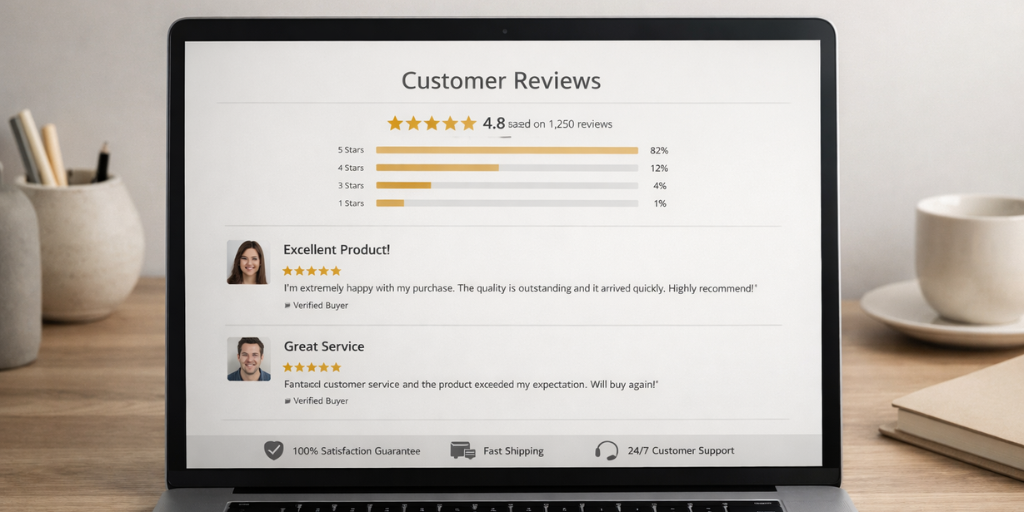
Customer testimonials, reviews, case studies and user-generated content can provide social proof and help potential customers feel more confident about choosing you.
For example, rather than simply saying that your service delivers results, show:
The challenge → The solution → The result
This type of storytelling gives your audience something tangible to understand and can be particularly effective for businesses selling higher-value services.
5. Industry News and Trends
Social media can also be a place to show that your business understands what’s happening within your industry.
Share relevant developments, trends, statistics or changes that could affect your customers.
But don’t simply repost an article and leave it there.
Add your own perspective.
Ask:
“What does this mean for our customers?”
That commentary is what turns a simple news share into valuable thought leadership.
6. Short-Form Video
Video continues to be an important part of social media.
You don’t necessarily need expensive equipment or a large production team. Short videos can include:
- Quick tips
- Tutorials
- FAQs
- Product demonstrations
- Team introductions
- Customer stories
- Behind-the-scenes clips
- Industry commentary
The key is to make the first few seconds count and give viewers a reason to keep watching.
A good social media strategy should consider which content format suits each platform, rather than simply publishing the exact same post everywhere.
7. Interactive Content
Social media is supposed to be social.
Give your audience opportunities to participate through:
- Polls
- Questions
- Quizzes
- “This or that” posts
- Opinions
- Comments
- Competitions
- Q&As
Interactive content can help increase engagement while also giving businesses useful information about what their audience thinks, wants and needs.
Your followers can become a valuable source of customer research.
8. Content That Shows Your Brand Personality
Not every post needs to teach something or sell something.
Sometimes, you simply need to show people who you are.
Share your company culture, celebrate milestones, introduce new team members, highlight achievements or show the personality behind the brand.
This is particularly important in crowded industries where several businesses may offer similar products or services.
Your brand personality can become part of the reason customers choose you.
How Much Promotional Content Should You Post?
There isn’t one perfect percentage for every business.
The important thing is to avoid making every post a sales pitch.
A balanced content calendar might include a mixture of:
Educate → Entertain → Engage → Build Trust → Promote
The exact balance should depend on your audience, industry, goals and platform.
The bigger question isn’t “How often should we sell?”
It’s:
“Does our content give people a reason to keep following us?”
Your Social Media Content Should Support Your Wider Marketing Strategy
Social media works best when it isn’t treated as a standalone activity.
Your social content can work alongside your:
- SEO strategy
- Content marketing
- Paid advertising
- Website
- Email marketing
- Brand strategy
For example, a blog could answer a common customer question, a social post could introduce the topic, and a paid campaign could then promote the content to a relevant audience.
This creates a connected customer journey rather than a collection of disconnected marketing activities.
How Everything Digital Can Help With Social Media
Coming up with ideas is only one part of successful social media marketing.
You also need a strategy, creative content, consistent publishing and the ability to understand what’s actually working.
Everything Digital helps businesses bring these elements together through its wider digital marketing solutions, including Content, Creative, Paid, Web and Strategy.
Its approach can connect social media activity with the rest of your digital presence, from developing content and creative assets to supporting paid campaigns and wider digital strategy.
This means your social media isn’t just about posting for the sake of posting. It can become part of a broader strategy designed to build visibility, strengthen your brand and generate meaningful business results.
Create a Social Media Strategy That Has a Purpose
The best social media accounts aren’t necessarily the ones that post the most.
They’re the ones that know why they’re posting.
Before creating your next content calendar, ask:
- Who are we trying to reach?
- What problems can we help them solve?
- What do we want people to think about our brand?
- Which content formats work best for our audience?
- What action do we want people to take?
- How does social media support our wider marketing goals?
Once you have those answers, creating content becomes much easier.
And instead of asking “What should we post today?”, you can start asking the more valuable question:
“What can we share today that helps move our audience closer to choosing us?”
Ready to Make More of Your Social Media?
Social media should be more than a box to tick on your marketing checklist. With the right strategy, content and creative approach, it can become an important part of how your business builds visibility, trust and engagement online.
Everything Digital provides end-to-end digital solutions designed to help businesses simplify their digital marketing and create a strategy that works across multiple channels.
Ready to take your social media further? Get in touch with Everything Digital to discuss your digital marketing goals.